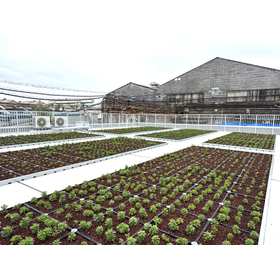
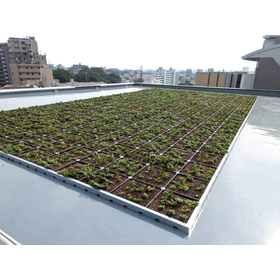
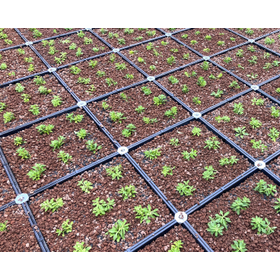
If the climate changes, rooftop greening will also change. A high-quality, low-cost rooftop greening system nurtured not just by experience, but by verification.
Verify thin-layer greening with numerical data. Confirm on-site, reflect it in products, and then verify again.
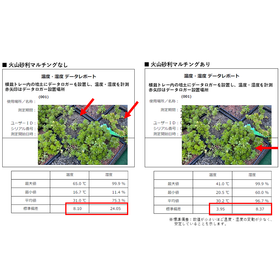
Our company is committed to improving the quality of rooftop greening through continuous verification. We conduct multifaceted verifications, including measuring soil temperature with data loggers, cross-referencing with weather data, and recording and analyzing growth conditions. Additionally, we are accumulating insights gained through a three-year dead plant warranty.
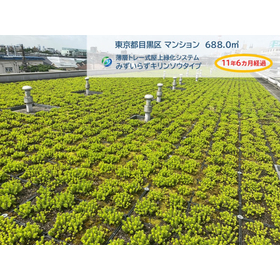
To date, we have overseen stable growth over many years among more than 2,459 construction projects. Based on this track record and verification, we have adopted a volcanic gravel mulching specification.
Rooftops present harsh conditions for plant growth, including dryness, high temperatures, and high humidity. The thin-layer tray system has a shallow soil thickness, making the balance of "water and air in the soil" crucial.
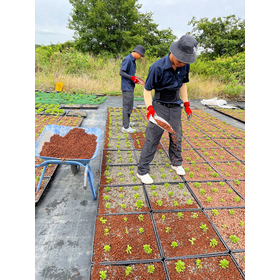
The specification with mulching suppresses moisture evaporation from the planting trays and rapid temperature changes, and we have confirmed through both measurement data and actual site conditions that it helps control heat retention and soil temperature increases in thin layers.
As the climate changes, rooftop greening will also change. Along with the changing climate, the thin-layer rooftop greening "Mizuirazu" will evolve. We continue to apply the three-year dead plant warranty to this new specification, embodying our responsibility for quality.



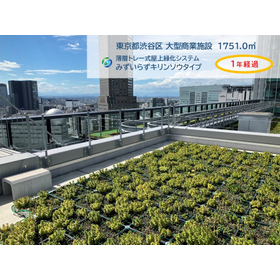
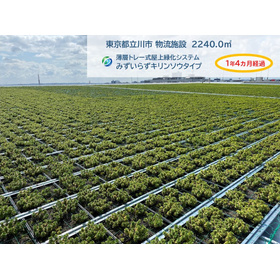


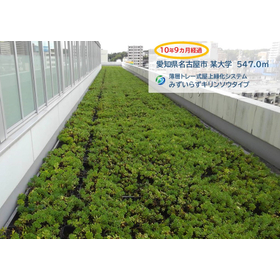
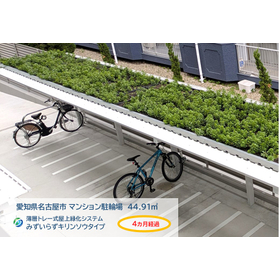
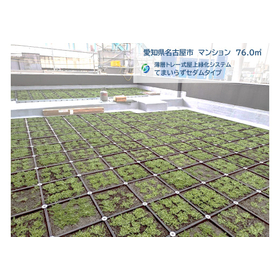
![Rooftop Greening and Wall Greening System [Case Study Collection and Catalog Pack]](https://image.mono.ipros.com/public/product/image/588/2000133885/IPROS8643233629825245655.jpg?w=280&h=280)